Premium Thin Glass for High Power Laser Applications - Superior Performance & Reliability

All Categories
Get a Quote

Get a Free Quote

Our representative will contact you soon.
Email
Name
Company Name
Products
Message
0/1000

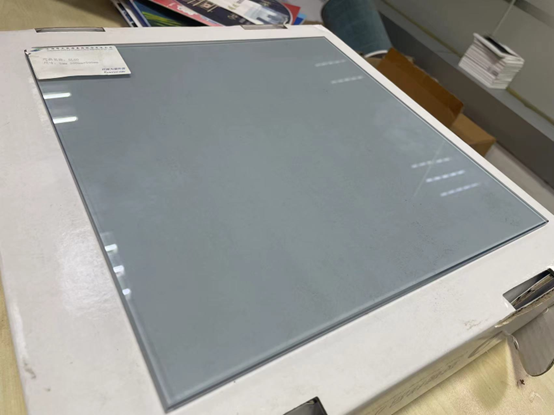
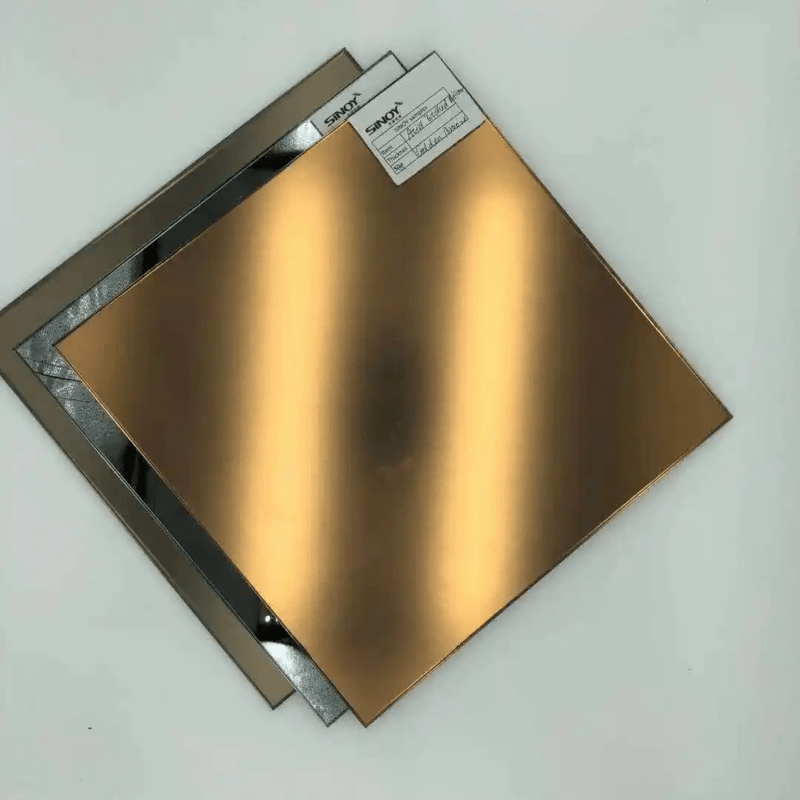
thin glass for high power

Thin glass for high power represents a revolutionary advancement in optical technology, designed specifically to handle intense laser systems and high-energy applications. This specialized glass material combines exceptional optical clarity with remarkable durability, making it indispensable for industries requiring precision and reliability under extreme conditions. The thin glass for high power features advanced composition that enables superior light transmission while maintaining structural integrity even when subjected to powerful laser beams and elevated temperatures. Manufacturing processes involve sophisticated techniques that create ultra-smooth surfaces and eliminate internal stress points, ensuring consistent performance across various wavelengths and power levels. The material exhibits exceptional thermal stability, allowing it to withstand rapid temperature changes without compromising its optical properties or developing stress-induced fractures. Key technological features include low absorption coefficients, minimal fluorescence, and excellent homogeneity throughout the substrate. The thin glass for high power undergoes rigorous quality control measures during production, including laser damage threshold testing and surface quality assessment. Applications span multiple industries, from aerospace and defense systems to medical laser equipment and scientific research facilities. In telecommunications, this glass enables high-power fiber laser systems that require exceptional beam quality and minimal signal loss. Industrial manufacturing benefits from its use in cutting and welding lasers, where consistent performance directly impacts production efficiency and product quality. Research laboratories utilize thin glass for high power in experimental setups involving high-energy physics and advanced spectroscopy applications. The material's unique properties make it suitable for both continuous wave and pulsed laser systems, adapting seamlessly to various operational requirements while maintaining optimal performance standards throughout extended use periods.

Popular Products

The primary advantage of thin glass for high power lies in its exceptional damage threshold capabilities, which significantly exceed traditional optical materials. This superior resistance to laser-induced damage allows equipment to operate at higher power levels without degradation, directly translating to improved productivity and reduced maintenance costs for end users. The enhanced thermal management properties of thin glass for high power enable more efficient heat dissipation, preventing hotspots that could compromise system performance or cause catastrophic failure. Users benefit from extended operational lifespans as the material maintains its optical properties even after prolonged exposure to intense radiation. Cost-effectiveness becomes apparent through reduced replacement frequency and minimal downtime requirements. The precision manufacturing process ensures consistent quality across production batches, eliminating performance variations that could affect critical applications. Superior surface quality reduces scattering losses, maximizing energy transmission efficiency and improving overall system performance. The thin profile reduces weight while maintaining structural strength, making it ideal for portable or space-constrained applications where every gram matters. Chemical resistance properties protect against environmental degradation, ensuring reliable performance in harsh operating conditions. The broad spectral transmission range accommodates various laser wavelengths without requiring multiple specialized components, simplifying inventory management and reducing procurement costs. Installation benefits include easier handling due to reduced weight and improved mounting options that accommodate thermal expansion. The thin glass for high power requires minimal special storage conditions, reducing facility overhead costs and simplifying logistics. Quality consistency enables predictable performance characteristics, allowing engineers to design systems with confidence in component reliability. The material's stability under varying environmental conditions ensures consistent results regardless of operational location or climate variations. Manufacturing scalability allows for cost-effective production of both small prototype quantities and large-volume orders, supporting projects from research and development through full-scale commercial deployment. These practical advantages combine to deliver measurable improvements in system reliability, operational efficiency, and total cost of ownership for organizations implementing thin glass for high power solutions.

Practical Tips

Choosing the Right Architectural Glass: Expert Tips

27

Nov

Choosing the Right Architectural Glass: Expert Tips

Choosing the Right Architectural Glass: Expert Tips The selection of architectural glass plays a crucial role in modern building design, impacting everything from energy efficiency to aesthetic appeal. As construction technology advances, the importa...
View More
2025 Guide: Types of Coated Glass for Modern Buildings

12

Dec

2025 Guide: Types of Coated Glass for Modern Buildings

Modern architecture demands materials that combine aesthetic appeal with superior performance, and coated glass has emerged as the cornerstone of contemporary building design. As we enter 2025, the evolution of coated glass technology continues to re...
View More
Power Glass vs Regular Glass: What's the Difference?

20

Jan

Power Glass vs Regular Glass: What's the Difference?

The construction and architectural industries have witnessed remarkable innovations in glass technology over recent decades. Among these breakthroughs, power glass stands out as a revolutionary material that transforms traditional building concepts. ...
View More
Top 10 Coated Glass Manufacturers in 2026

04

Mar

Top 10 Coated Glass Manufacturers in 2026

The coated glass industry continues to evolve rapidly as manufacturers push the boundaries of energy efficiency and architectural innovation. Modern coated glass solutions have become indispensable in commercial and residential construction projects ...
View More

Get a Free Quote

Our representative will contact you soon.
Email
Name
Company Name
Products
Message
0/1000

thin glass for high power

Exceptional Laser Damage Threshold Performance

Exceptional Laser Damage Threshold Performance

The laser damage threshold performance of thin glass for high power represents a quantum leap in optical material capabilities, setting new industry standards for high-energy applications. This critical characteristic determines the maximum power density the material can withstand before sustaining permanent damage, making it the fundamental parameter for system designers working with intense laser systems. The thin glass for high power achieves damage threshold values that substantially exceed conventional optical substrates through advanced material engineering and precision manufacturing techniques. The crystalline structure has been optimized to minimize defect sites that typically serve as damage initiation points, while surface preparation techniques eliminate microscopic irregularities that could concentrate energy and cause localized heating. This superior damage resistance translates directly to operational advantages, allowing laser systems to operate at higher power levels without the constant concern of component failure. Engineers can push system performance boundaries while maintaining safety margins, enabling breakthrough applications in industrial processing, scientific research, and defense technologies. The economic implications prove substantial as higher damage thresholds reduce the frequency of component replacement, minimizing operational disruptions and maintenance costs. System uptime improves dramatically as operators no longer need to derate laser power to protect optical components, maximizing productive output and return on investment. Quality control processes during manufacturing ensure consistent damage threshold performance across production lots, providing predictable reliability that system designers can incorporate into their specifications with confidence. The material's resistance to cumulative damage effects means performance remains stable over extended operational periods, unlike some alternatives that gradually degrade with repeated exposure. This longevity characteristic proves particularly valuable in continuous operation environments where component accessibility for maintenance may be limited. Testing protocols verify damage threshold performance under various pulse durations, repetition rates, and wavelength conditions, ensuring comprehensive characterization that matches real-world operating parameters. The thin glass for high power maintains its exceptional damage resistance across a broad temperature range, enabling reliable performance in applications where thermal management presents challenges.

Advanced Thermal Management and Stability

Advanced Thermal Management and Stability

The thermal management capabilities of thin glass for high power deliver unprecedented stability and performance consistency across demanding operational environments, addressing one of the most critical challenges in high-energy optical systems. This advanced thermal performance stems from carefully engineered material properties that optimize heat conduction, minimize thermal expansion effects, and prevent stress-induced optical distortions that plague conventional glass substrates. The thermal conductivity characteristics have been enhanced to facilitate rapid heat dissipation, preventing the accumulation of thermal energy that could lead to beam distortion or component damage. Low thermal expansion coefficients ensure dimensional stability even during rapid temperature cycling, maintaining precise optical alignment and preventing mechanical stress that could compromise system performance. The thin glass for high power exhibits exceptional thermal shock resistance, allowing it to withstand sudden temperature changes without developing stress fractures or optical aberrations. This stability proves crucial in applications where laser systems experience intermittent operation or varying environmental conditions. The material's thermal properties remain consistent across its operational temperature range, ensuring predictable performance regardless of ambient conditions or thermal loading from absorbed laser energy. Thermal cycling tests demonstrate remarkable durability, with the thin glass for high power maintaining its optical properties through thousands of heating and cooling cycles without measurable degradation. The uniform thermal distribution characteristics prevent hotspot formation that could create localized stress concentrations or optical distortions. This uniform behavior ensures consistent beam quality and eliminates thermal lensing effects that can compromise system accuracy and performance. Manufacturing processes incorporate stress relief techniques that eliminate internal tensions, creating a thermally neutral substrate that responds predictably to temperature variations. The thermal stability extends to the material's optical properties, with refractive index variations minimized across the operational temperature range. This consistency enables precise optical system design with reduced need for temperature compensation mechanisms. Applications in space environments benefit particularly from these thermal management characteristics, where extreme temperature variations and limited heat dissipation options challenge conventional materials. Industrial laser processing applications experience improved cutting and welding quality due to stable beam characteristics maintained through thermal cycling.
Superior Optical Clarity and Transmission Efficiency

Superior Optical Clarity and Transmission Efficiency

The optical clarity and transmission efficiency of thin glass for high power establish new benchmarks for precision optical applications, delivering exceptional light transmission performance that maximizes system efficiency and beam quality. This superior optical performance results from advanced material composition and manufacturing processes that eliminate internal inclusions, minimize surface imperfections, and optimize molecular structure for maximum light transmission across critical wavelength ranges. The thin glass for high power achieves transmission levels that approach theoretical limits, ensuring minimal energy loss during beam propagation and maximizing available laser power for intended applications. Absorption coefficients have been reduced to negligible levels through careful selection of raw materials and purification processes that eliminate trace elements known to absorb specific wavelengths. This ultra-low absorption characteristic prevents internal heating that could lead to thermal lensing effects or gradual performance degradation over time. Surface quality specifications exceed industry standards, with polishing techniques that achieve sub-angstrom surface roughness levels and eliminate microscopic scratches or tool marks that could scatter incident light. The homogeneity of the thin glass for high power ensures uniform optical properties throughout the substrate, eliminating variations that could affect beam profile or introduce unwanted optical effects. Stress birefringence has been minimized through controlled annealing processes, ensuring polarization-sensitive applications maintain their intended characteristics without unwanted polarization rotation or depolarization effects. The broad spectral transmission range accommodates multiple laser wavelengths simultaneously, enabling multi-wavelength systems to utilize single optical components rather than requiring wavelength-specific elements. This versatility simplifies system design and reduces component inventory requirements while maintaining optimal performance across all operational wavelengths. Anti-reflection coating compatibility ensures maximum transmission efficiency can be achieved through standard optical coating processes, with the substrate properties optimized to support various coating technologies. The thin glass for high power maintains its optical clarity even under intense radiation exposure, resisting solarization effects that degrade performance in conventional optical materials. Fluorescence characteristics have been minimized to prevent unwanted background emission that could interfere with sensitive detection systems or reduce signal-to-noise ratios in analytical applications. Quality testing protocols verify optical performance under simulated operational conditions, ensuring consistent transmission efficiency and beam quality maintenance throughout the material's service life.

Get a Free Quote

Our representative will contact you soon.
Email
Name
Company Name
Products
Message
0/1000
Newsletter
Contact Us