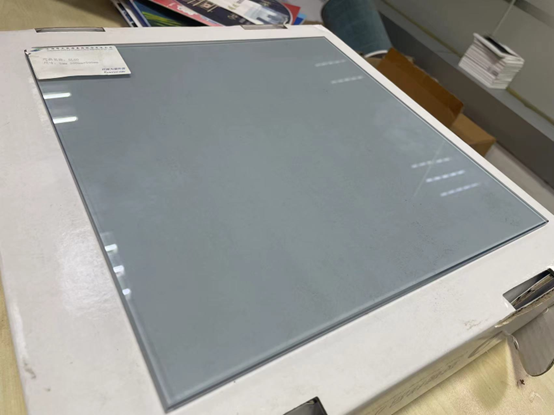
CSP Tempered Glass: Superior Strength, Safety & Performance Solutions

All Categories
Get a Quote

Get a Free Quote

Our representative will contact you soon.
Email
Name
Company Name
Products
Message
0/1000

csp tempered glass

CSP tempered glass represents a revolutionary advancement in glass manufacturing technology, offering exceptional strength and durability for modern applications. This specialized glass undergoes a controlled thermal treatment process that creates internal stress patterns, resulting in material properties that far exceed conventional glass standards. The CSP tempered glass manufacturing process involves heating the glass to approximately 650 degrees Celsius before rapidly cooling it with controlled air jets, creating compressive stress on the surface while maintaining tensile stress in the core. This unique stress distribution gives CSP tempered glass its characteristic strength and safety properties. The main functions of CSP tempered glass include providing superior impact resistance, enhanced thermal shock resistance, and improved safety characteristics through its fragmentation pattern. When CSP tempered glass breaks, it shatters into small, relatively harmless fragments rather than dangerous sharp shards, making it ideal for safety-critical applications. Technological features of CSP tempered glass encompass precise stress control, uniform heating and cooling processes, and advanced quality control systems that ensure consistent performance. The glass maintains optical clarity while delivering mechanical strength that is typically four to five times greater than standard annealed glass. CSP tempered glass applications span across architectural glazing, automotive windshields, electronic device screens, solar panel covers, and furniture components. In architectural settings, CSP tempered glass provides structural integrity for curtain walls, skylights, and large window installations. The automotive industry relies on CSP tempered glass for side windows and rear windshields, where safety and durability are paramount. Electronic manufacturers incorporate CSP tempered glass into smartphone screens, tablet displays, and computer monitors to protect against impact damage while maintaining touch sensitivity. Solar energy systems utilize CSP tempered glass as protective covers for photovoltaic panels, ensuring long-term performance under harsh environmental conditions.


New Product Releases

CSP tempered glass delivers numerous practical benefits that make it an superior choice for demanding applications across multiple industries. The primary advantage of CSP tempered glass lies in its exceptional strength characteristics, providing four to five times the mechanical strength of ordinary glass while maintaining complete optical transparency. This enhanced strength translates directly into reduced replacement costs and improved safety for end users. Safety represents another critical advantage of CSP tempered glass, as its unique fracture pattern creates small, cube-shaped fragments that minimize injury risk compared to sharp, jagged pieces produced by regular glass breakage. This safety feature makes CSP tempered glass particularly valuable in public spaces, residential applications, and transportation vehicles where human safety is paramount. Thermal resistance stands as a significant advantage of CSP tempered glass, enabling it to withstand temperature variations of up to 200 degrees Celsius without structural failure. This thermal stability proves essential for outdoor applications, automotive use, and industrial environments where temperature fluctuations occur regularly. The durability advantage of CSP tempered glass extends product lifespans significantly, reducing maintenance requirements and replacement frequency for businesses and consumers. Scratch resistance represents another practical benefit, as CSP tempered glass maintains its clarity and appearance even under heavy use conditions. This feature proves particularly valuable for electronic screens, architectural glazing, and furniture applications where aesthetic appearance matters. Chemical resistance of CSP tempered glass provides superior performance against environmental factors such as acid rain, salt water exposure, and industrial chemicals, making it ideal for marine environments and urban installations. Cost-effectiveness emerges as a long-term advantage, as the initial investment in CSP tempered glass typically pays for itself through reduced maintenance costs, fewer replacements, and improved performance over time. Energy efficiency benefits include better insulation properties in architectural applications, contributing to reduced heating and cooling costs. The versatility advantage of CSP tempered glass allows for custom sizing, shaping, and finishing options to meet specific application requirements without compromising structural integrity.

Latest News

Solar Glass vs Regular Glass: Key Differences Explained

27

Nov

Solar Glass vs Regular Glass: Key Differences Explained

Solar Glass vs Regular Glass: Key Differences Explained The evolution of renewable energy technology has brought significant advances in materials science, particularly in the development of specialized solar glass. This advanced material plays a cru...
View More
Sustainable Architectural Glass: Design & Benefits

27

Nov

Sustainable Architectural Glass: Design & Benefits

Sustainable Architectural Glass: Design & Benefits Modern construction has embraced architectural glass as a fundamental material that combines aesthetics with functionality. This versatile building component has revolutionized contemporary architect...
View More
Smart Coated Glass: The Future of Building Design

04

Mar

Smart Coated Glass: The Future of Building Design

Modern architecture demands materials that combine aesthetic appeal with superior performance, and coated glass has emerged as the cornerstone of contemporary building design. This advanced glazing technology represents a revolutionary approach to en...
View More
2026 CSP Glass Guide: Types, Benefits & Applications

04

Mar

2026 CSP Glass Guide: Types, Benefits & Applications

Concentrated solar power technology continues to revolutionize the renewable energy landscape, with csp glass serving as a critical component that determines the efficiency and longevity of solar thermal systems. As we move into 2026, understanding t...
View More

Get a Free Quote

Our representative will contact you soon.
Email
Name
Company Name
Products
Message
0/1000

csp tempered glass

Superior Impact Resistance Technology

Superior Impact Resistance Technology

CSP tempered glass incorporates advanced impact resistance technology that revolutionizes glass performance in high-stress environments. This remarkable feature stems from the precise thermal tempering process that creates controlled stress patterns throughout the glass structure, resulting in material strength that exceeds conventional glass by 400 to 500 percent. The impact resistance of CSP tempered glass proves particularly valuable in applications where mechanical stress, vibrations, or potential impacts pose ongoing challenges. In architectural installations, this superior impact resistance enables the use of larger glass panels without compromising structural integrity, allowing architects to design more open and aesthetically pleasing spaces. The technology behind this impact resistance involves carefully controlled heating and cooling cycles that create compressive stress on the glass surface while maintaining tensile stress in the core, producing a material that can withstand significant mechanical loads. For electronic device manufacturers, the impact resistance of CSP tempered glass provides crucial protection for expensive internal components, reducing warranty claims and customer dissatisfaction. Automotive applications benefit tremendously from this technology, as CSP tempered glass can withstand road debris, hail damage, and minor collisions without compromising passenger safety. The impact resistance also extends to everyday handling situations, where CSP tempered glass screens resist damage from drops, bumps, and general wear that would typically damage standard glass surfaces. Industrial applications leverage this impact resistance for machinery guards, viewing windows, and protective barriers where equipment vibration and operational stresses occur regularly. Testing protocols for CSP tempered glass impact resistance involve standardized procedures that simulate real-world stress conditions, ensuring consistent performance across different manufacturing batches. Quality control measures verify that each piece of CSP tempered glass meets stringent impact resistance standards before reaching customers, providing confidence in long-term performance and reliability.
Enhanced Thermal Stability Performance

Enhanced Thermal Stability Performance

The enhanced thermal stability performance of CSP tempered glass sets it apart from conventional glass products through its ability to withstand extreme temperature variations without structural compromise or optical distortion. This exceptional thermal performance results from the specialized tempering process that creates balanced internal stresses, allowing CSP tempered glass to handle temperature differentials of up to 200 degrees Celsius while maintaining dimensional stability and clarity. Thermal stability proves crucial in automotive applications where CSP tempered glass must endure temperature extremes ranging from subzero winter conditions to intense summer heat absorption, all while maintaining passenger safety and visibility. Solar panel installations particularly benefit from the thermal stability of CSP tempered glass, as the material must withstand daily temperature cycling, seasonal variations, and intense solar radiation without degradation or performance loss. The thermal expansion coefficient of CSP tempered glass remains consistent across temperature ranges, preventing stress fractures that commonly occur in standard glass when exposed to rapid temperature changes. Building facades utilizing CSP tempered glass can handle the thermal stress created by sunlight exposure, shadow patterns, and HVAC system variations without developing cracks or optical distortions that compromise building aesthetics or functionality. Electronic applications leverage the thermal stability of CSP tempered glass to protect sensitive components from heat-related damage while maintaining touch screen sensitivity and display clarity under varying operating temperatures. Manufacturing environments benefit from CSP tempered glass thermal stability in viewing windows, protective barriers, and equipment housings where industrial processes generate significant heat fluctuations. The material science behind this thermal stability involves precise control of the tempering process parameters, including heating rates, temperature uniformity, and cooling patterns that create optimal stress distribution. Quality assurance testing for thermal stability includes accelerated aging tests, thermal shock resistance evaluations, and long-term performance monitoring to ensure consistent performance throughout the product lifecycle.
Advanced Safety Fragmentation Pattern

Advanced Safety Fragmentation Pattern

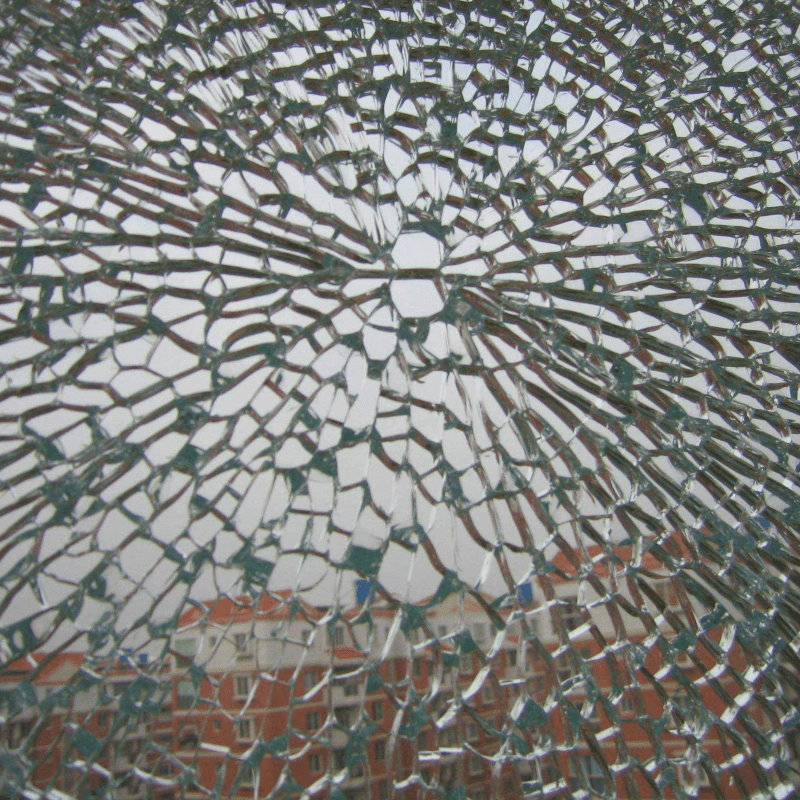
CSP tempered glass features an advanced safety fragmentation pattern that represents a quantum leap in user protection compared to conventional glass products, making it the preferred choice for applications where human safety is paramount. When CSP tempered glass experiences sufficient force to cause breakage, it fragments into thousands of small, cube-shaped pieces approximately 3-5 millimeters in size, with relatively smooth edges that significantly reduce the risk of serious injury. This controlled fragmentation pattern results from the internal stress distribution created during the tempering process, where compressive forces on the surface and tensile forces in the core create a predetermined failure mode that prioritizes safety. Automotive safety regulations worldwide recognize the superior protection offered by the CSP tempered glass fragmentation pattern, particularly in side windows and rear windshields where passenger evacuation and rescue access are critical considerations. The safety benefits extend to architectural applications where CSP tempered glass protects building occupants from injury during seismic events, extreme weather conditions, or accidental impacts that might cause glass failure. Educational institutions and healthcare facilities particularly value the safety fragmentation pattern of CSP tempered glass, as it minimizes injury risks in environments where children, elderly individuals, or patients with mobility limitations might be present. Retail environments benefit from the safety features of CSP tempered glass in storefront applications, display cases, and interior partitions where public access creates ongoing liability concerns for property owners. The predictable fragmentation pattern of CSP tempered glass also facilitates easier cleanup and disposal compared to irregular sharp fragments produced by standard glass breakage, reducing secondary injury risks and maintenance costs. Emergency response teams recognize the advantages of CSP tempered glass fragmentation patterns, as the small, relatively uniform pieces are easier to clear from accident scenes and pose fewer risks during rescue operations. Manufacturing quality control ensures that the fragmentation pattern of CSP tempered glass meets strict safety standards through standardized testing procedures that verify fragment size distribution and edge characteristics across production batches.

Get a Free Quote

Our representative will contact you soon.
Email
Name
Company Name
Products
Message
0/1000
Newsletter
Contact Us