
 EN
EN

Solar panel efficiency depends heavily on the quality of materials used in photovoltaic cell construction, with the glass substrate playing a crucial role in light transmission and electrical performance. TCO glass represents a significant advancement over conventional glass substrates, offering enhanced conductivity and optical properties that directly impact solar energy conversion rates and overall system performance.
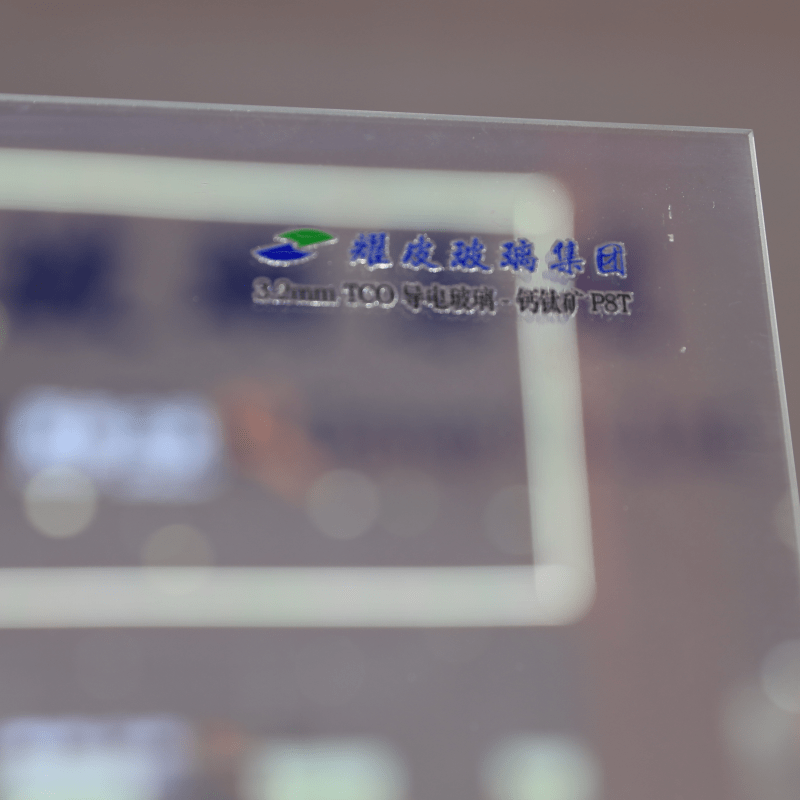
The fundamental difference between TCO glass and standard glass lies in the transparent conductive oxide coating that provides electrical conductivity while maintaining optical transparency. This unique combination of properties makes TCO glass indispensable for thin-film solar cells, where the glass substrate must serve dual functions as both a structural component and an electrical contact layer.
Superior Electrical Conductivity Properties
Enhanced Charge Collection Efficiency
TCO glass demonstrates significantly superior electrical conductivity compared to standard glass, which is essentially an electrical insulator. The transparent conductive oxide coating, typically composed of materials like fluorine-doped tin oxide or aluminum-doped zinc oxide, provides sheet resistance values ranging from 5 to 50 ohms per square. This low resistance enables efficient charge collection across the entire solar cell surface.
Standard glass substrates require separate metallic grid patterns or conductive films to collect electrical current, adding complexity and potential points of failure to the solar cell design. TCO glass eliminates this requirement by integrating conductivity directly into the substrate material.
The uniform conductivity distribution across TCO glass surfaces ensures consistent electrical performance throughout the solar panel lifetime. This characteristic becomes particularly important in large-area solar installations where maintaining uniform current collection across extensive panel surfaces directly impacts overall system efficiency.
Reduced Series Resistance Impact
Series resistance represents one of the primary factors limiting solar cell efficiency, and TCO glass addresses this challenge through its inherently conductive properties. The low sheet resistance of TCO glass minimizes voltage drops across the cell surface, enabling higher fill factors and improved power output compared to systems using standard glass with separate conductive elements.
Standard glass implementations often suffer from resistance losses at contact points between the glass substrate and metallic conductors. TCO glass eliminates these interface resistance issues by providing direct electrical contact through the transparent conductive coating, resulting in measurably improved electrical performance.
The temperature coefficient of resistance for TCO glass remains relatively stable across typical solar panel operating temperatures, ensuring consistent electrical performance under varying environmental conditions. This stability contrasts with some metallic conductor systems that may experience significant resistance changes with temperature fluctuations.
Advanced Optical Transmission Characteristics
Optimized Light Transmission Spectrum
TCO glass exhibits exceptional optical transmission properties across the solar spectrum, typically achieving transmission rates exceeding 85% for wavelengths between 400 and 1200 nanometers. This high transmission efficiency directly translates to increased photon availability for conversion to electrical energy within the solar cell active layers.
Standard glass substrates, while offering good optical clarity, lack the precisely engineered optical properties of TCO glass coatings. The refractive index matching between TCO glass and semiconductor materials reduces reflection losses at interfaces, maximizing light coupling into the photovoltaic absorption layers.
The anti-reflective properties inherent in many TCO glass formulations further enhance light collection efficiency compared to standard glass surfaces. These optical enhancements contribute measurably to improved short-circuit current density and overall solar cell performance metrics.
Reduced Optical Losses
Fresnel reflection losses at glass-air and glass-semiconductor interfaces represent significant efficiency limitations in solar cell designs using standard glass substrates. TCO glass addresses these losses through engineered surface properties and coating compositions that minimize unwanted reflections.
The transparent conductive oxide coating on TCO glass can be optimized for specific wavelength ranges, allowing solar cell designers to tailor optical properties for maximum efficiency with particular semiconductor materials. This customization capability is not available with standard glass substrates.
Light scattering effects in TCO glass can be controlled through surface texturing techniques, enabling enhanced light trapping within thin-film solar cells. Standard glass lacks this capability for integrated light management, requiring additional optical components that increase system complexity and cost.
Manufacturing and Processing Advantages
Simplified Cell Architecture
TCO glass enables simplified solar cell architectures by eliminating the need for separate transparent conductor deposition steps during manufacturing. Standard glass substrates require additional processing steps to apply conductive materials, increasing manufacturing complexity and potential defect introduction points.
The integrated nature of conductivity in TCO glass reduces the total number of material interfaces within the solar cell stack, improving reliability and reducing potential delamination issues. Standard glass implementations with separate conductive layers create additional interfaces that may compromise long-term durability.
Manufacturing yield improvements often result from using TCO glass due to reduced processing steps and fewer opportunities for contamination or defect introduction. The pre-existing conductive properties of TCO glass eliminate potential issues related to conductor adhesion and uniformity that can affect standard glass-based solar cells.
Enhanced Process Compatibility
TCO glass substrates demonstrate excellent compatibility with high-temperature processing steps commonly used in thin-film solar cell manufacturing. The thermal stability of transparent conductive oxide coatings allows processing temperatures that might degrade separate conductive films applied to standard glass.
Chemical compatibility between TCO glass surfaces and semiconductor deposition processes ensures optimal interface formation during cell manufacturing. Standard glass may require surface treatments or barrier layers to achieve comparable interface quality with active semiconductor materials.
The dimensional stability of TCO glass under processing conditions exceeds that of many standard glass substrates with applied conductive coatings, reducing warpage and stress-related defects during manufacturing. This stability contributes to improved manufacturing yields and consistent product quality.
Long-term Performance and Reliability Benefits
Environmental Durability Advantages
TCO glass demonstrates superior environmental stability compared to standard glass with separate conductive elements, particularly regarding moisture ingress and thermal cycling effects. The monolithic nature of the conductive coating in TCO glass eliminates delamination pathways that can compromise standard glass-conductor combinations.
UV exposure testing reveals that TCO glass maintains its electrical and optical properties more consistently than standard glass systems with organic or metallic conductors. This stability directly translates to improved long-term solar panel performance and extended operational lifespans.
Corrosion resistance of TCO glass coatings exceeds that of many metallic conductor systems used with standard glass, particularly in marine or industrial environments where chemical exposure may accelerate degradation. The oxide nature of TCO coatings provides inherent protection against environmental corrosion mechanisms.
Mechanical Stress Tolerance
The mechanical properties of TCO glass, including thermal expansion matching with semiconductor materials, reduce stress-induced failures that may affect standard glass implementations. Differential thermal expansion between standard glass and applied conductors can create mechanical stresses leading to premature failure.
Impact resistance and flexural strength characteristics of TCO glass often exceed those of standard glass with additional coating layers. The integrated nature of the conductive coating eliminates weak interfaces that might compromise mechanical integrity under stress conditions.
Fatigue resistance under thermal cycling conditions shows measurable improvements with TCO glass compared to standard glass systems. This enhanced durability becomes particularly important in applications experiencing significant temperature variations throughout operational lifespans.
FAQ
What makes TCO glass more conductive than regular glass?
TCO glass contains a transparent conductive oxide coating, typically made from materials like fluorine-doped tin oxide or aluminum-doped zinc oxide, which provides electrical conductivity while maintaining optical transparency. Regular glass is an electrical insulator and requires separate conductive elements to carry electrical current in solar applications.
How does TCO glass improve solar panel efficiency?
TCO glass improves solar panel efficiency through enhanced light transmission exceeding 85% across the solar spectrum, reduced electrical resistance losses, and elimination of interface resistance between glass and separate conductors. These combined benefits result in higher current collection efficiency and improved overall power output compared to standard glass implementations.
Is TCO glass more expensive than standard glass for solar applications?
While TCO glass has higher initial material costs than standard glass, it often provides better overall value through simplified manufacturing processes, elimination of separate conductor deposition steps, improved yields, and enhanced long-term performance. The total system cost may be comparable or lower when considering manufacturing and performance benefits.
Can TCO glass be used in all types of solar panels?
TCO glass is primarily used in thin-film solar technologies where transparent conductors are required, such as amorphous silicon, cadmium telluride, and copper indium gallium selenide cells. Crystalline silicon panels typically use standard glass with metallic grid patterns, though TCO glass may offer advantages in certain specialized crystalline silicon applications requiring transparent contacts.