
 EN
EN

A crack in your vehicle's glass might seem like a minor inconvenience at first, but understanding when it crosses the line from a cosmetic issue to a safety emergency is critical. Autoglass is not merely a transparent barrier against wind and weather — it is a structural component that plays a direct role in occupant protection, airbag deployment accuracy, and the overall rigidity of your vehicle's cabin. Knowing when to act on a crack or chip can mean the difference between a simple repair and a costly, dangerous failure on the road.
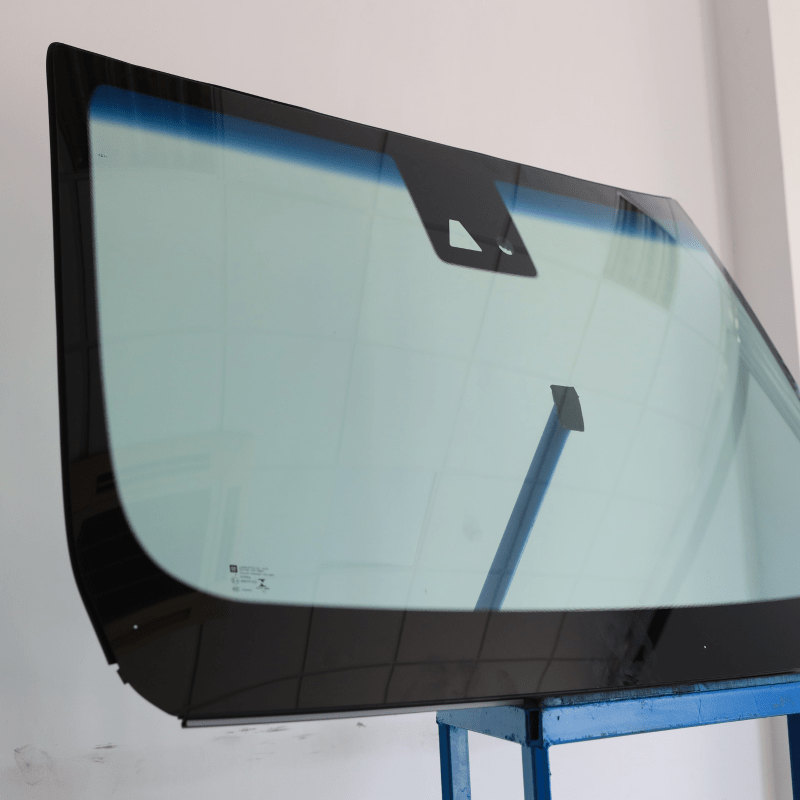
Drivers frequently delay addressing damaged autoglass because cracks appear stable or seem unlikely to worsen. In practice, temperature fluctuations, road vibrations, and even routine car washes accelerate crack propagation far faster than most people expect. This article examines the specific conditions, crack types, and damage thresholds that should trigger an immediate replacement decision, so you can protect both your investment and everyone inside the vehicle.
Understanding the Role of Autoglass in Vehicle Safety
Structural Integrity and Cabin Protection
Modern autoglass — particularly the windshield — contributes approximately 30 to 45 percent of a vehicle cabin's structural rigidity during a rollover. This means a compromised windshield cannot distribute impact forces properly, increasing the risk of roof collapse. Unlike side windows, which are designed to shatter and allow occupant exit, windshields are laminated to stay intact and prevent ejection.
When autoglass is cracked, its laminated structure is already partially compromised. Even if the glass appears to hold its shape, the internal PVB (polyvinyl butyral) interlayer may be delaminated around the crack zone, silently reducing the structural contribution that drivers depend on in high-impact scenarios. This hidden damage is one of the strongest reasons why visual assessment alone is never sufficient.
Replacement is not just about restoring clarity. It restores the engineered safety performance that the original autoglass was designed to deliver. Delaying replacement of a structurally compromised windshield exposes all vehicle occupants to risks that no amount of careful driving can fully mitigate.
Airbag System Dependency on Intact Autoglass
Passenger-side airbags in most modern vehicles are calibrated to deploy against the windshield before redirecting toward the occupant. This deployment sequence depends entirely on the windshield being firmly bonded and structurally sound. A cracked or improperly bonded autoglass panel can deflect or absorb the airbag deployment force incorrectly, causing the airbag to deploy in the wrong direction or with reduced protective effect.
This interaction between the airbag system and the autoglass is rarely discussed in routine vehicle maintenance conversations, yet it is a documented safety concern recognized by automotive engineers. If your windshield carries a significant crack — particularly one that runs near the center or across the passenger zone — the airbag protection profile of the entire vehicle is compromised.
The practical takeaway is straightforward: replacing damaged autoglass is not optional when your safety systems depend on it functioning as a structural partner, not just a transparent surface.
Crack Types That Demand Immediate Replacement
Identifying Damage Beyond Repair Thresholds
Not every chip or crack in autoglass requires immediate replacement. Small bullseye chips or minor surface chips smaller than a coin can often be repaired with resin injection if they are caught early and have not reached the inner laminate. However, specific crack types move beyond the repair threshold and into replacement territory immediately.
Edge cracks — those that begin within five centimeters of the windshield's border — are among the most dangerous. These cracks compromise the adhesive bonding zone where the autoglass is sealed to the vehicle frame, and they tend to propagate rapidly. Even a small edge crack significantly undermines the windshield's ability to stay bonded during a collision or rollover, making replacement the only responsible course of action.
Long cracks exceeding 15 centimeters, or any crack that has branched or star-patterned, cannot be structurally repaired with resin. The resin fills visible gaps but does not restore the mechanical strength lost across a multi-directional fracture. For these damage types, autoglass replacement is not a preference — it is the only safe solution.
Cracks in the Driver's Line of Sight
The driver's primary visual zone — typically a central area roughly 30 centimeters wide and centered on the driver's eye position — is governed by strict clarity standards in most jurisdictions. Any crack, chip, or repair haze within this zone can legally prohibit vehicle operation. More importantly, optical distortion caused by damaged autoglass in this area impairs reaction time and depth perception, especially in low-light or high-contrast conditions.
Even a successfully repaired chip within the driver's sight zone can leave residual distortion that affects visual acuity. If the damage is located centrally in the driver's field of view, replacement of the autoglass panel is typically recommended regardless of crack length, because safety and legality both demand optical clarity at that position.
Driving with impaired autoglass in the primary vision zone is a recognized contributing factor in traffic incidents. Replacing the panel eliminates the optical risk entirely and restores full visibility, which no resin repair can guarantee when the damage falls in this sensitive area.
Environmental and Operational Triggers That Accelerate Crack Growth
Temperature Extremes and Thermal Stress
One of the most underestimated threats to cracked autoglass is thermal cycling. Glass expands and contracts with temperature changes, and a crack creates a stress concentration point where expansion differentials are amplified. A crack that measures three centimeters in mild autumn temperatures can spread to fifteen centimeters overnight after a frost, or within hours of parking in direct summer sunlight.
Pouring hot water over a frosted cracked windshield — a common but dangerous habit — applies sudden thermal shock directly to the most vulnerable area of the autoglass. The rapid temperature change introduces mechanical stress that can cause even stable-looking cracks to split across the entire windshield within seconds. If you notice a crack worsening after seasonal temperature changes, replacement should be scheduled without delay.
Thermal stress is cumulative, not linear. Each heating and cooling cycle adds microscopic fatigue to the crack edges, and eventually the crack will propagate past the point where the glass can be safely operated. Monitoring crack behavior across seasons is a practical indicator of when your autoglass has reached replacement urgency.
Road Vibration and Pressure Differentials
Vehicle operation subjects autoglass to continuous low-frequency vibration from the road surface, engine, and wind pressure at highway speeds. These vibrations create micro-movement at crack edges, slowly widening the fracture over time. What appears as a stable crack after a week of city driving may visibly worsen after a single long highway journey, because the sustained high-speed pressure differential across the windshield amplifies crack propagation.
Pothole impacts, railroad crossings, and rough terrain create sudden high-amplitude vibrations that can instantly extend a crack. Drivers who regularly operate on poor road conditions should treat any existing crack in their autoglass as a time-sensitive replacement need rather than a monitoring situation.
The combination of thermal stress, vibration fatigue, and pressure loading means that a cracked autoglass rarely stays the same size for long. Proactive replacement — before the crack reaches a critical dimension — is both safer and more cost-efficient than waiting for the damage to become severe.
Legal, Inspection, and Insurance Considerations
Roadworthiness and Vehicle Inspection Compliance
In most countries and jurisdictions, cracked autoglass — particularly the windshield — is a direct roadworthiness failure. Annual vehicle inspections typically include a visual assessment of glass integrity, and cracks in the primary vision zone, edge cracks, or cracks exceeding length thresholds will result in a failed inspection until replacement is completed. Operating a vehicle that would fail inspection exposes the driver to fines and potential liability in the event of an accident.
Beyond inspection compliance, law enforcement officers in many regions have the authority to issue on-the-spot citations for visibly cracked autoglass that impairs driver visibility. The cost of such citations, combined with potential insurance complications if an accident occurs while operating a vehicle with known glass damage, makes timely replacement a sound financial decision as well as a safety one.
If your vehicle is due for inspection and carries a crack that is borderline in terms of size or position, it is always more cost-effective to replace the autoglass before the inspection rather than risk a failure, a reinspection fee, and an extended period of non-compliance.
Insurance Coverage and Replacement Timing
Many comprehensive vehicle insurance policies cover autoglass replacement, sometimes with zero deductible, especially for windshield damage. The window for claiming this coverage is typically tied to reporting the damage promptly — delays in reporting can complicate or nullify claims, particularly if the crack has grown significantly since the original incident.
Insurance adjusters assess whether the damage was pre-existing or recent, and a crack that has clearly propagated across the entire windshield due to neglect may be assessed differently than one reported immediately after a road impact. Prompt action — reporting the damage and initiating replacement as soon as the crack is discovered — protects your coverage eligibility and ensures the claim process is straightforward.
Choosing a quality autoglass replacement that meets OEM specifications is also relevant to insurance and warranty considerations. Substandard glass that fails to meet vehicle manufacturer tolerances may affect claims or void certain vehicle warranties, making product quality an important variable in the replacement decision.
Making the Replacement Decision Confidently
Key Signals That Replacement Cannot Be Deferred
There are clear signals that should convert any hesitation about replacement into a firm decision. If the crack has reached the edge of the autoglass panel, replacement is non-negotiable. If the crack passes through the driver's direct line of sight, replacement is the only safe and legal option. If the crack has branched, spread across more than one-third of the windshield width, or if you can feel the glass flexing when pressed gently near the crack, the structural integrity has been compromised to a degree that disqualifies the glass from further use.
Visible moisture between the glass layers — appearing as a cloudy or iridescent zone around the crack — indicates that the laminate interlayer has delaminated. Once moisture infiltrates the PVB layer, the windshield's laminated structure is functionally compromised in that zone. No repair technique addresses delaminated autoglass, and replacement is the only resolution.
A practical rule of thumb used by experienced autoglass technicians is this: if you find yourself checking the crack more than once a week and noticing growth, you have already passed the optimal replacement window. Acting decisively at the first sign of crack progression is always more cost-effective than managing a growing problem.
Selecting the Right Replacement Autoglass
When the decision to replace has been made, the quality of the replacement autoglass matters significantly. OEM-equivalent glass maintains the correct optical clarity, thickness tolerances, and UV filtering properties that your vehicle's sensors, cameras, and ADAS systems were calibrated to work with. Many modern vehicles have rain sensors, lane departure cameras, and heads-up display coatings integrated into or calibrated against the windshield, and off-specification glass can disrupt these functions.
The adhesive bond used during installation is equally important. High-quality urethane adhesives cure to the correct strength within a defined window, and the vehicle should not be driven until the cure time specified by the adhesive manufacturer has elapsed. Rushing this process — or using substandard adhesives — reduces the windshield's bonding strength and undermines the structural role that autoglass provides.
Finally, ensure that the replacement autoglass is installed by a certified technician familiar with your vehicle's make and model. Improper installation is a leading cause of post-replacement leaks, wind noise, and bonding failures. A properly installed, high-quality replacement panel restores full safety performance and gives you confidence that your vehicle's protective systems are functioning as designed.
FAQ
How do I know if my autoglass needs repair or full replacement?
Small chips smaller than a coin that have not penetrated the inner laminate can typically be repaired with resin. However, cracks longer than 15 centimeters, edge cracks, cracks in the driver's vision zone, or any crack with branching or moisture infiltration require full autoglass replacement. When in doubt, a professional inspection will clarify which approach is appropriate for your specific damage.
Is it safe to drive with a small crack in my autoglass?
Driving with even a small crack in your autoglass carries risk because cracks can spread rapidly due to temperature changes, vibration, and pressure. A crack that seems stable today may reach a critical length after one cold night or a highway drive. If the crack is in your line of sight, driving is both unsafe and potentially illegal. Schedule an inspection as soon as possible rather than monitoring the crack and hoping it remains stable.
How long does autoglass replacement typically take?
A standard autoglass replacement typically takes between 60 and 90 minutes for the physical installation. However, the adhesive cure time — during which the vehicle should not be driven — can range from one hour to several hours depending on the adhesive type and ambient temperature. Your technician should provide a specific safe-to-drive timeframe based on the products used and the conditions on the day of installation.
Will replacing my autoglass affect my vehicle's ADAS systems?
Yes, many modern vehicles require recalibration of cameras and sensors after autoglass replacement because these systems are calibrated to the original windshield's optical properties and mounting position. Rain sensors, lane departure cameras, and forward collision warning systems may not function correctly after replacement if recalibration is not performed. Always confirm with your installer that ADAS recalibration is included in the replacement service for your vehicle model.